Retail Back Office: Inventory - Sub Category
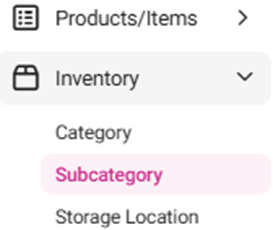
Navigation: Sign into the Back Office for your Retail Store, then select Inventory > Subcategory
The Sub Category page appears, including the Total Value on Hand, along with a table containing the following columns:
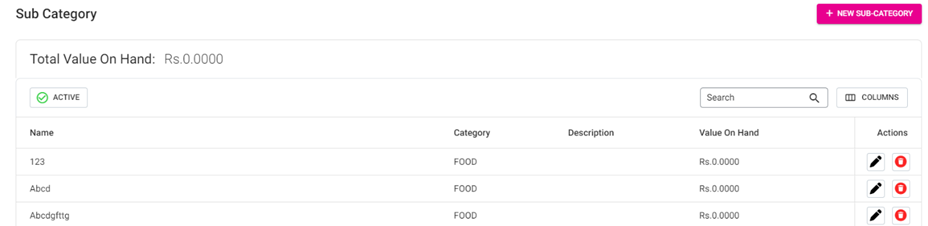
- Name – Displays the subcategory’s name.
- Category – The category under which the subcategory is assigned.
- Description – Displays description of the subcategory.
- Value On Hand – Displays the available amount of stock.
- Actions – Buttons for Edit (pencil) and Delete (trash can).
- Delete – The Delete pop-up including the message ‘Are you sure you want to delete this item’ appears, with Cancel and Delete options.
- Select Delete and the Subcategory is sent to Inactive status with a ‘Subcategory inactivated successfully’ confirmation message appearing.
- Select Cancel, and the Subcategory is kept in Active status.
Create a New Subcategory (or Update an Existing Subcategory)
- Create a new Subcategory by clicking + New Subcategory at the top-right (or click the corresponding Edit [pencil] of an existing Subcategory).
- The New/Update Subcategory pane appears, with the following fields:
- Name – (Mandatory) Enter the name of the subcategory (maximum of 25 characters).
- Select a Category from the dropdown list of created Categories.
- Code – Enter the code for the subcategory (letters and numbers allowed, no maximum).
- For the Override Tax toggle: if enabled (set to YES), the Tax dropdown is available for selecting the Taxes that will be overriden.
- Description – Enter more details about the subcategory (letters and numbers allowed, no maximum).
- When ready, click Save / Update. You’re returned to the Subcategory page with a confirmation message appearing at the top-right.
- Click X Close / Cancel to close the pane without creating / updating a Subcategory.